How We Built HomeLoft's Two-Platform Home Goods Empire
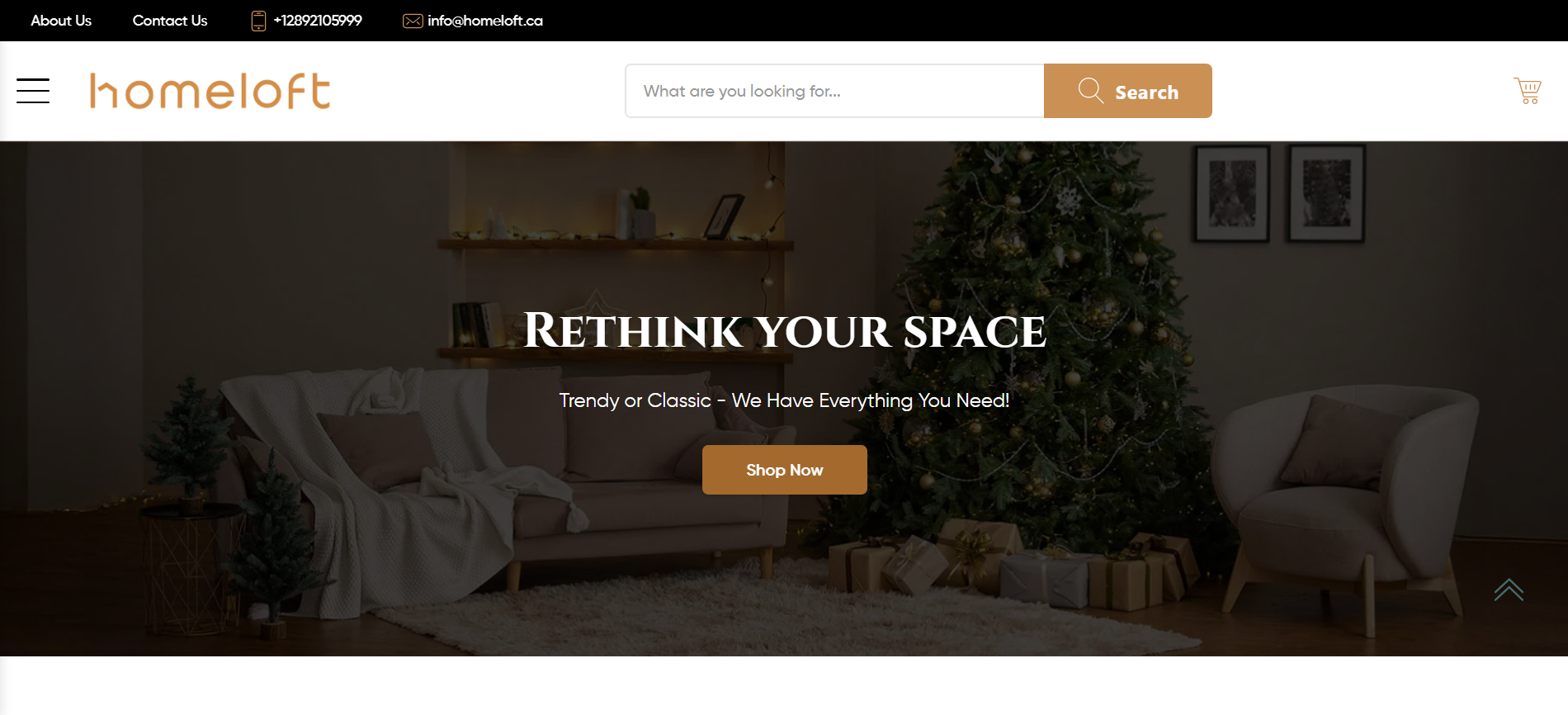
A dual-platform e-commerce design and development engagement – building homeloft.ca for Canadian shoppers and homeloftglobal.com for the worldwide market, each with its own curated catalog, category structure, and regional shopping experience, united by a single brand promise: convenient, quality home goods for everyone.
Full Platform
Reimagining the Homeloft experience
BACKGROUND
About HomeLoft
HomeLoft is a home goods retailer with a singular dream: to create the most convenient home goods shopping experience on the internet.
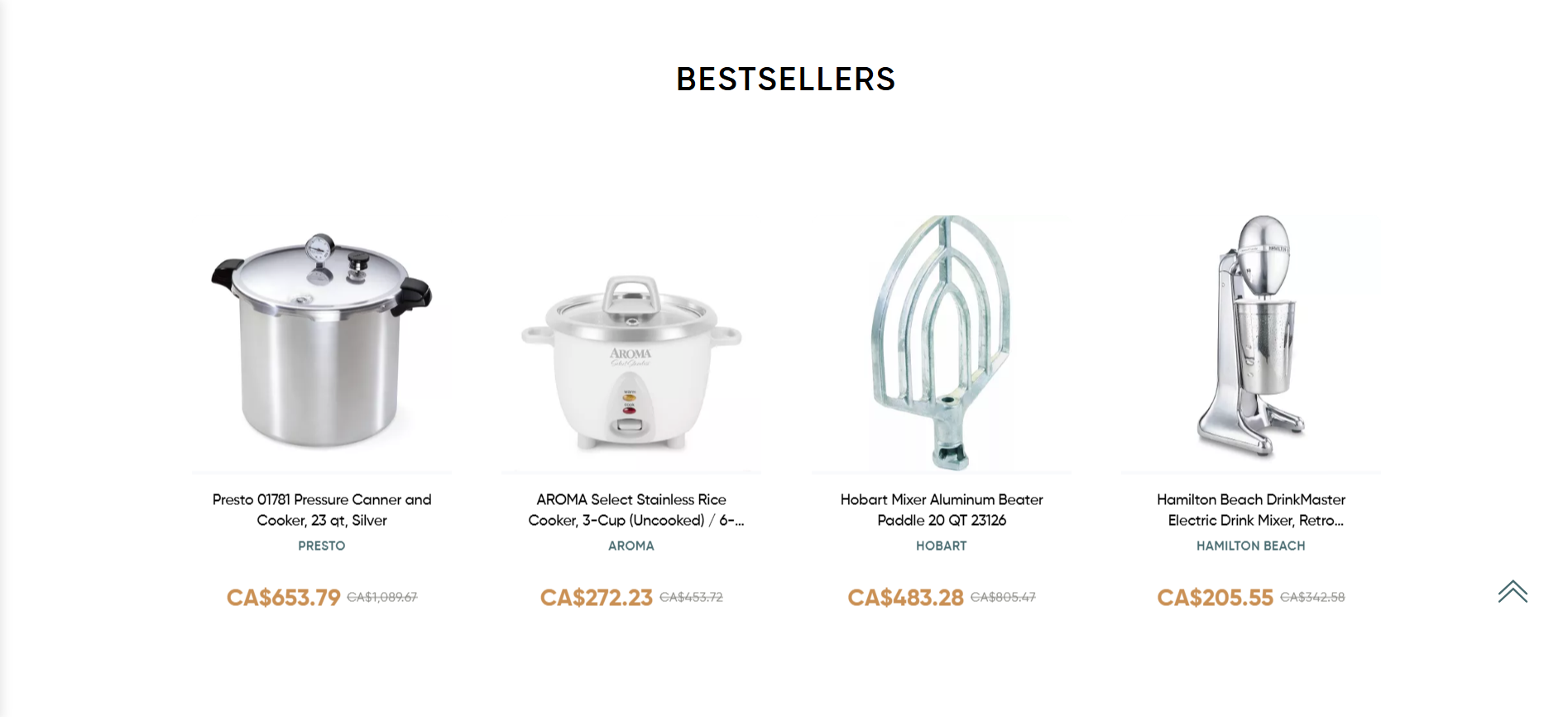
With one of the world’s largest curated collections of home goods – each selected for quality, style, and utility – HomeLoft operates two distinct platforms: homeloft.ca serving Canadian shoppers with hundreds of thousands of products, and homeloftglobal.com reaching international audiences worldwide.
Fully independent e-commerce platforms built and launched
Combined product categories live across both platforms
Increase in product page conversions across both platforms
Drop in cart abandonment
THE PROBLEM
HomeLoft's Core Pain Points
Despite a strong catalog and a clear brand promise, HomeLoft needed two robust, market-specific platforms built from the ground up – each capable of handling a massive product ecosystem without losing clarity, trust, or conversion performance.
Two Markets, Two Catalogs
Building one brand across two distinct regional platforms – with different category depths, product ranges, and audience expectations – required a careful architecture that maintained brand cohesion while serving each market uniquely.
Weak Product Storytelling
Across both platforms, product pages lacked the lifestyle imagery, specifications, and descriptive depth that home goods shoppers need to buy with confidence – especially for furniture and appliances.
High Cart Abandonment
Unclear delivery information, absent trust signals, and a fragmented checkout experience were pushing customers out at the final stage on both homeloft.ca and homeloftglobal.com.
Not Mobile-Optimised
The majority of home goods browsing happens on mobile – but both platforms were desktop-built, creating friction across product grids, filters, and checkout on every phone.
Discovery Gaps Across 27 Categories
With 10 categories on the global platform and 17 on the Canadian store, finding the right product without a clear search, filter, and navigation system was a significant barrier for shoppers.
Trust Not Established
Neither platform surfaced customer reviews, delivery promises, or quality credentials prominently – making first-time buyers hesitant to commit, especially on the global storefront targeting international audiences.
Our Process
How We Work: Discovery to Launch
Building two market-specific e-commerce platforms simultaneously required a disciplined process - shared design foundations with market-specific architecture, developed in parallel and launched in sequence.
Phase 01 · 1.5 Weeks
Discovery & Dual-Market Strategy
We mapped both markets - Canadian domestic shoppers and international home goods buyers - identifying the distinct category priorities, trust expectations, and conversion behaviours for each audience to inform two separate but brand-aligned platform strategies.
Phase 02 · 1 Week
Shopper Research & Journey Mapping
We defined shopper personas for both platforms - mapping the browsing-to-buy journey across furniture, kitchen, garden, and beyond - identifying the information, imagery, and trust signals that convert home goods browsers into buyers in each market.
Phase 03 · 2 Weeks
Catalog Architecture & UX Wireframing
We structured 10-category global and 17-category Canadian catalog architectures independently - wireframing homepage, category pages, product listings, and checkout flows for each platform before any visual design began.
Phase 04 · 3 Weeks
Unified Visual Design & Brand System
A shared design system in Figma - warm, lifestyle-led, with earthy tones and editorial product presentation - applied to both platforms with market-specific adaptations that maintain brand coherence while serving each audience's expectations.
Phase 05 · 8 Weeks
Development of Both Platforms & QA
Parallel development of homeloft.ca and homeloftglobal.com - product catalog, filtering, cart, checkout, and payment integrations built for each - with mobile-first builds, cross-device QA across both platforms, and CMS setup for independent team management.
Phase 06
Launch, SEO & Ongoing Optimisation
Sequential platform launches with market-specific SEO strategies - Canadian home goods terms for homeloft.ca, international search terms for homeloftglobal.com - plus ongoing CRO across both platforms to compound conversion gains.
The Solution
A Strategic & Human-Centered Build
We built two fully independent, market-specific home goods platforms – each engineered to make finding and buying the perfect home product as effortless as possible, regardless of whether a customer is shopping from Canada or anywhere else in the world.
01
Market-Specific Catalog Architecture
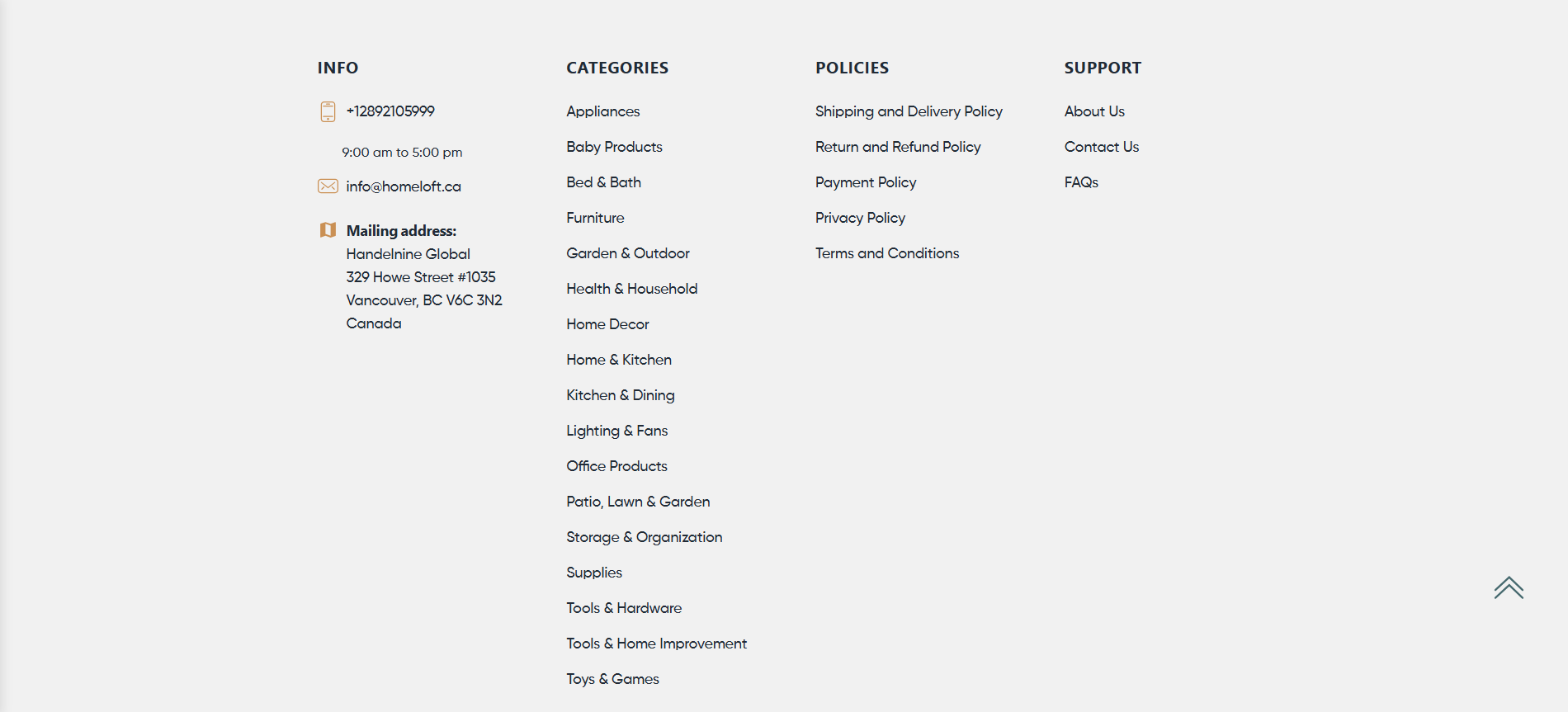
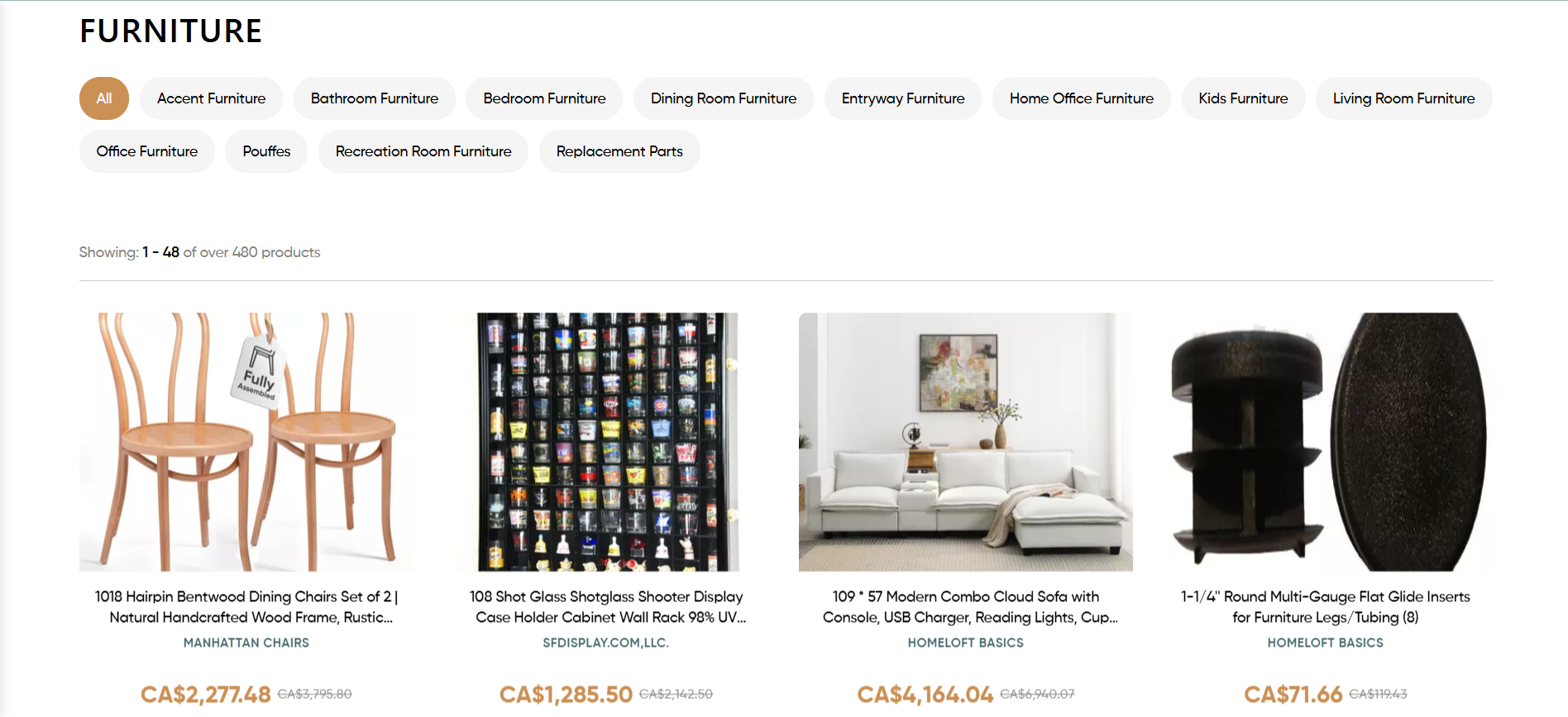
Two distinct catalog structures – 10 curated global categories on homeloftglobal.com and 17 comprehensive Canadian categories on homeloft.ca – each built around the specific product range and shopping patterns of its audience.
02
Rich Product Storytelling
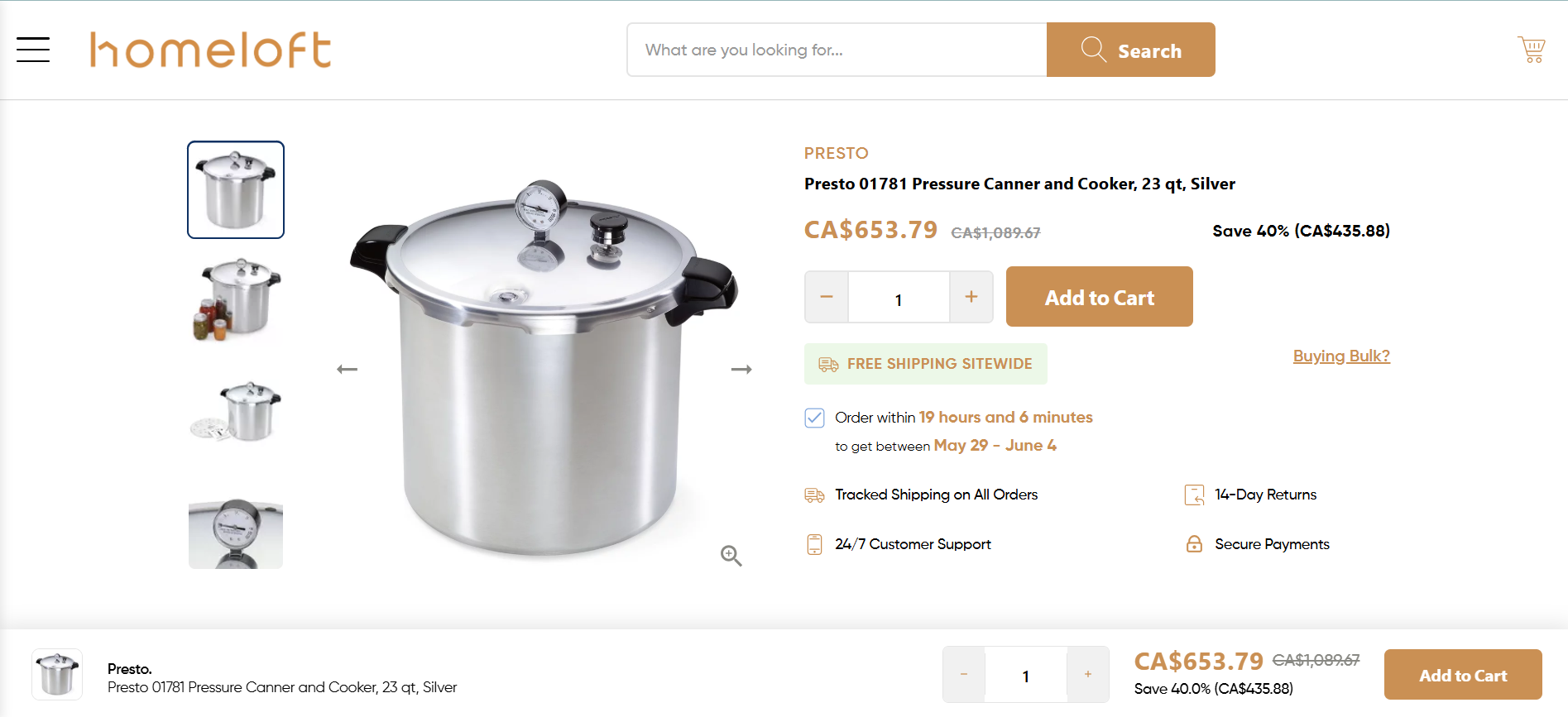
Elevated product pages across both platforms – lifestyle imagery, detailed specifications, material callouts, and dimension guides – giving every shopper the confidence to buy without needing to visit a physical store.
03
Frictionless Mobile Checkout
Mobile-first checkout on both platforms – clear delivery timelines, visible security badges, and multiple payment options – reducing abandonment at the most critical conversion moment for both Canadian and global buyers.
04
Smart Product Discovery
Intelligent filtering, predictive on-site search, related product carousels, and editorially curated collection pages – turning a catalog of hundreds of thousands of products into a browsing experience that feels manageable and inspiring.
05
Trust Architecture for Both Markets
Customer reviews, delivery promise banners, quality credentials, and transparent returns policies – tailored for each market’s expectations and surfaced throughout both shopping journeys to convert first-time visitors into confident buyers.
06
Unified Brand, Independent Platforms
A shared design system ensuring both platforms feel unmistakably HomeLoft, same quality bar, same warmth, same promise – while each platform operates independently with its own domain, catalog, and regional optimisation.
Features Delivered
Modules & Features Implemented
Two fully independent e-commerce storefronts built
10-category global + 17-category Canadian catalog structure
Smart product filters — price, material, size, style
Rich product pages — lifestyle imagery, specs & dimensions
Mobile-first, one-page streamlined checkout on both
Multi-currency & region-specific delivery messaging
Customer review system with verified purchase badges
"Shop the Look" editorial collection pages
Predictive on-site search with product suggestions
Related products & upsell carousels
Wishlist & save-for-later on both platforms
Independent CMS per platform — full team autonomy
Market-specific SEO — Canadian & international search terms
Analytics — product views, add-to-cart, funnel per platform
Technology Stack
Built on WordPress for Power & Editorial Freedom