Many tech leaders face a critical roadblock when scaling their products. You have the funding, the market validation, and a backlog of ambitious feature requests. Yet, moving from a fragile MVP to a highly scalable SaaS platform feels like wading through molasses. The root cause usually isn’t a lack of effort from your team. It often traces back to having the wrong type of engineering talent at the helm.
According to McKinsey & Company, large IT projects run 45% over budget and 7% over time, while delivering 56% less value than predicted. When you hire builders before finalizing your blueprints, you end up paying for code rewrites, mounting technical debt, and delayed launches.
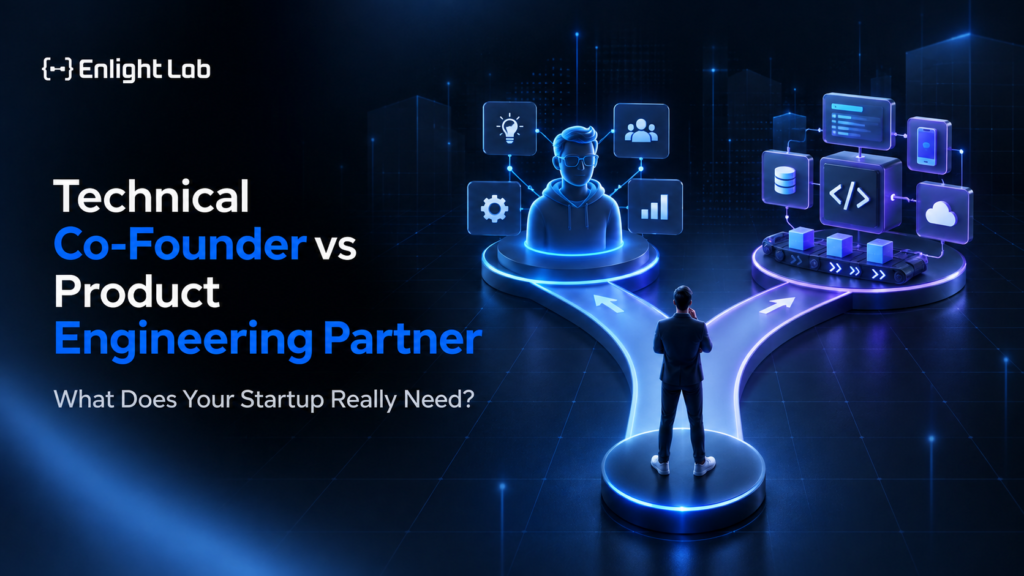
Choosing between a Full-Stack Consultant vs Developer is a decision that dictates your feature velocity, infrastructure costs, and risk level. Many teams assume these roles are interchangeable. They are not. Full-stack developers are execution-focused. They write code, deliver features, and keep your application running. Full-stack consultants, on the other hand, analyze your business needs, design systems, and help you avoid costly mistakes before they happen.
As a result, each solves a very different problem, and choosing the wrong one early often leads to delays, budget overruns, and long-term technical debt.
In today’s environment, where software decisions directly affect ROI and growth, understanding the difference between these roles is essential. This guide will help you understand how each role works, where each adds the most value, and how to choose the right fit for your project without wasting time or money.
Quick Answer: Full-Stack Consultant vs Developer
- Full-Stack Consultant: Acts as a strategic advisor. Focuses on system architecture, choosing the right tech stack, mitigating risks, and ensuring the product aligns with business goals like MRR growth and low churn. Best hired before development starts or during major pivots.
- Full-Stack Developer: Acts as an implementer. Focuses on building software across the frontend and backend, deploying ultimate features, fixing annoying bugs, and maintaining application health. Best hired when technical requirements are clearly defined and the project needs execution capacity.
Understanding the Full-Stack Landscape in 2026
The definition of a full-stack professional has expanded significantly. It is no longer just about knowing React for the front-end and Node.js for the back-end.
Beyond Front-End and Back-End: The Modern Stack
Today’s full-stack talent must navigate a sprawling ecosystem. Modern software delivery includes cloud infrastructure management, automated testing, continuous integration and continuous deployment (CI/CD) pipelines, and edge computing. As user expectations rise, sub-100ms response times and real-time data synchronization are now baseline requirements.
This growing complexity means engineering leaders cannot simply hire a “coder.” You need professionals who understand how different systems communicate.
Key Technologies Dominating 2026
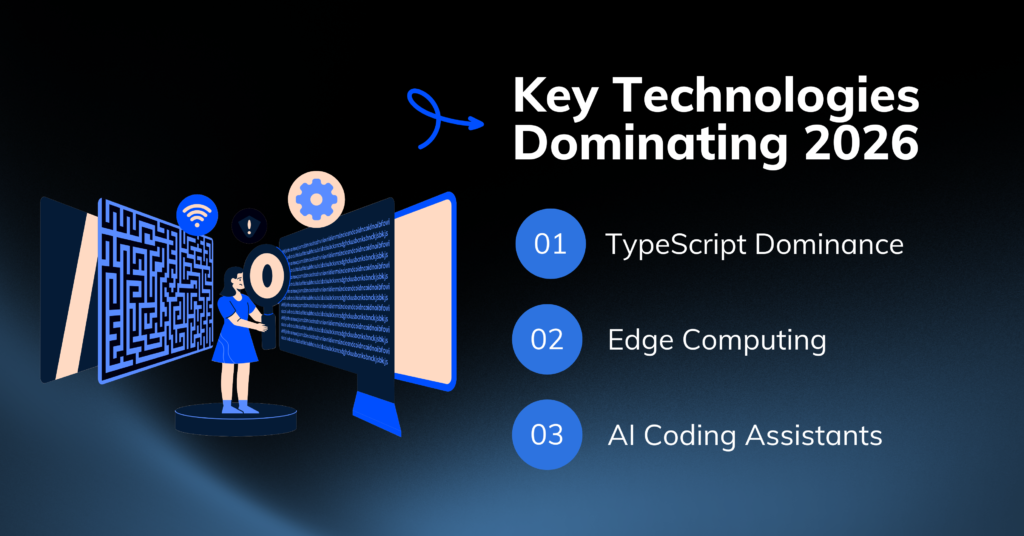
The tools we use to build software have shifted. If you are scaling an engineering team today, these are the trends shaping the talent pool:
- TypeScript Dominance: Type safety is no longer optional. TypeScript is the default across both front-end and back-end environments, preventing critical integration errors before they reach production.
- Edge Computing: Deploying applications at the edge (via platforms like Cloudflare Workers or Vercel) is the standard for high-performance SaaS products.
- AI Coding Assistants: Tools like GitHub Copilot and Cursor are mandatory. Nearly 84% of developers use AI tools daily to automate boilerplate code. Engineers are now judged on their ability to orchestrate AI output and enforce architecture, rather than raw typing speed.
The Full-Stack Developer: The Builder and Implementer
When you have a clear roadmap and need to increase your feature velocity, a full-stack developer is your engine for growth.
Who is a Full-Stack Developer?
A full stack developer is responsible for turning requirements into working software. They are hands-on engineers who build, test, optimize, and maintain applications based on strictly defined requirements. Their success is measured by delivery metrics: sprint completion rates, code quality, and application uptime.
Core Responsibilities and Deliverables
- Hands-on Coding: Writing production-ready code across the front-end interface and back-end database.
- System Implementation: Integrating third-party APIs, managing database queries, and ensuring seamless user experiences.
- Debugging and Optimization: Identifying bugs, resolving support tickets, and improving page load speeds.
- AI Tool Utilization: Using AI tools to rapidly scaffold basic features while manually verifying complex business logic.
When to Hire a Full-Stack Developer
- Expanding an Existing Team: You have an established product and need more hands on deck to clear the feature backlog.
- Clear Technical Scope: Your architecture is locked in, wireframes are approved, and API requirements are documented.
- Ongoing Maintenance: Your SaaS requires dedicated, long-term ownership for iterative improvements and bug fixes.
Potential Challenges and Considerations
Developers are phenomenal at building what is asked of them. However, if the initial request is fundamentally flawed, they will build a flawed system efficiently. Relying solely on developers for strategic direction often results in a bloated tech stack and expensive cloud computing bills down the road.
Now that you understand what developers actually do in real projects, let’s look at the other side of the equation, i.e., what a full stack consultant brings and why it can completely change your project outcomes.
The Full-Stack Consultant: The Strategist and Problem-Solver
If your technical delivery is chaotic, or your cloud costs are spiraling out of control, throwing more developers at the problem will only accelerate the burn rate. You need a strategist.
Who is a Full-Stack Consultant?
A full-stack consultant bridges the gap between technical execution and business objectives. They operate at a strategic level, focusing on software architecture, scalability, and workflow optimization. They ensure that every line of code written serves a direct business outcome, such as reducing churn or lowering customer acquisition costs.
Key Responsibilities and Deliverables
- Technical Due Diligence: Auditing existing codebases to identify security vulnerabilities, technical debt, and scalability bottlenecks.
- Strategic Roadmapping: Selecting the right database structures and cloud providers to handle a 10x increase in user traffic.
- Workflow Optimization: Implementing robust CI/CD pipelines to ensure 90% on-time feature delivery.
- Cost Optimization: Identifying oversized server instances and inefficient queries to drastically reduce monthly infrastructure spend.
When to Engage a Full-Stack Consultant
- Starting a New SaaS Product: You need to validate the technical feasibility and choose a stack that won’t require a total rewrite in 12 months.
- Hitting Infrastructure Limits: Your database crashes during peak traffic, or your deployment cycles take days instead of minutes.
- Integrating AI Features: You want to add LLM-powered automation to your product but lack the internal expertise to implement it securely.
- Seeking Unbiased Evaluation: You need an external expert to review a potential software acquisition or audit a failing vendor relationship.
Full-Stack Consultant vs Developer: A Head-to-Head Comparison
Understanding the distinct value of each role helps you allocate your budget effectively.
Core Objectives and Focus
Developers focus on feature delivery and sprint completion. They want to know how the login screen should look and which database tables to update.
Consultants focus on risk reduction and operational efficiency. They evaluate whether building a custom authentication system is a waste of time compared to integrating a secure third-party provider like Auth0.
Scope of Work
- Developers work in the system. Their primary role is to write code, fix bugs, and implement features according to a predefined roadmap.
- Consultants work on the system. They provide high-level strategic guidance, audit existing architecture, and design blueprints for future development, often without writing a single line of production code.
Timeline and Engagement Model
- Developers are typically hired for long-term execution. They become an integral part of the team, working on the product day-to-day.
- Consultants are engaged for specific, short-to-mid-term projects. Their goal is to solve a particular problem, deliver a strategic plan, and then step away.
Skillset Emphasis
- Developers have deep expertise in specific programming languages, frameworks, and tools. Their value lies in their ability to build and maintain software efficiently.
- Consultants possess a broad range of experience across multiple industries and technologies. Their value lies in pattern recognition, strategic foresight, and the ability to diagnose complex problems quickly.
Cost Structures and ROI Considerations
- Developers generally operate on long-term contracts or full-time salaries. Offshore mid-level developers might start around $25 an hour, while senior local engineers command much higher rates. The ROI comes from consistent product output and IP retention.
- Consultants typically work on short-to-mid-term engagements using custom advisory pricing, fixed-scope contracts, or retainers. While their hourly rate is higher, the ROI is massive. A consultant can save a company tens of thousands of dollars by preventing a single architectural mistake or avoiding unnecessary vendor lock-in.
Core Differences That Impact Your Project
Here is a clear side-by-side comparison of full stack consultant vs developer:
| Factor | Full Stack Developer | Full Stack Consultant |
| Primary Focus | Coding and feature delivery | Strategy, planning, and architecture |
| Role in Project | Execution | Decision-making and guidance |
| Problem Solving | Technical issues | Business + technical challenges |
| Project Involvement | Build and maintain software | Analyse, design, and optimise systems |
| Client Interaction | Limited | High involvement with stakeholders |
| Success Metric | Working software | Scalable and effective solution |
| Risk Impact | May follow flawed direction | Reduces risk before development starts |
Key insight:
Full-Stack Developers solve “How do we build this?”
Full-Stack Consultants solve “What should we build and why?”
Making the Right Choice for Your Project
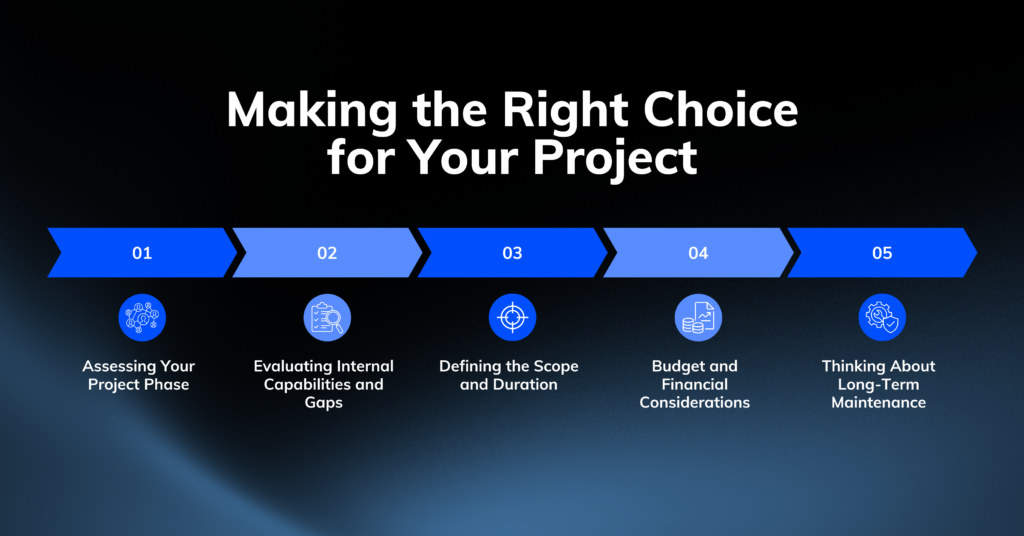
Your hiring decision should directly reflect the current phase of your business.
Assessing Your Project Phase
Early Stage Startup: If you are scoping an MVP, start with a consultant. Let them define the architecture and the data models. Once the blueprint is approved, hand the execution over to a developer to build it quickly.
Growth Stage: You have product-market fit, but your app is slowing down. Bring in a consultant to audit the bottlenecks and optimize the database. Simultaneously, hire senior developers to maintain feature velocity while the consultant refactors the core architecture.
Evaluating Internal Capabilities and Gaps
Look at your current leadership. If you are a non-technical founder, relying entirely on freelance developers to make critical infrastructure choices is incredibly risky. You need a consultant to act as a fractional CTO. If you already have a strong CTO but they are overworked, developers can take the coding burden off their plate.
Defining the Scope and Duration
Is the project a short-term, well-defined task, or a long-term, evolving initiative? For a specific problem, like a database migration or a security audit, a consultant is ideal. For ongoing development and feature implementation, a developer is the more cost-effective choice.
Budget and Financial Considerations
Consultants have a higher hourly rate but can deliver immense value quickly, saving money in the long run by preventing costly errors. Developers have a lower hourly rate and are better suited for long-term budget allocation where consistent output is the priority. Align your budget with the role that offers the best return for your specific financial situation.
Thinking About Long-Term Maintenance
Who will maintain the code once the project is “done”? If you hire a consultant to build a complex system and they leave, your team might struggle to manage it. In this scenario, it’s better to have developers involved from the start, even if a consultant leads the initial architecture. This ensures knowledge transfer and long-term sustainability.
Future Trends: Evolving Roles in 2026 and Beyond
The landscape of software engineering is fundamentally shifting.
The Impact of AI and Automation
AI is heavily compressing junior development roles. Since AI agents can handle basic CRUD endpoints and unit tests, the “grunt work” is evaporating.
By 2027, 80% of the engineering workflows will need to upskill. Developers will transition from coders to AI orchestrators. They will guide AI tools to generate boilerplate, and then use their human judgment to review critical security paths.
Consultants will increasingly focus on “AI-native” software delivery. They will help businesses figure out how to embed AI into their workflows safely, managing the complex coordination between human workers, microservices, and large language models.
Securing the Right Choice: Full-Stack Consultant vs Developer
Scaling a software product requires a delicate balance of strategy and execution. Choosing between a Full-Stack Consultant vs Developer comes down to identifying your biggest bottleneck.
If you lack clear technical direction, architecture plans, or scalable infrastructure, a consultant will save you from expensive failures. If your blueprints are finalized and you simply lack the hands to build the product, developers will drive your feature velocity forward.
The key is not choosing faster, but choosing smarter. Take a step back, assess your current stage, and identify where your friction truly lies.
At Enlight Lab, the focus is on helping you make that decision with clarity. Whether you need strategic guidance, execution support, or both, the goal is to align your technology choices with long-term business outcomes.
If you are uncertain where to begin, a structured technical assessment can give you the direction you need, so you can move forward with confidence, not assumptions.
The success of your project is often defined by this one decision. Make it with clarity.