Imagine you want to build a software platform that reads supplier contracts, identifies risky clauses, and alerts your team before a contract is approved.
The idea sounds useful. Your team has identified the problem, and you can already picture how the finished product might work.
But there is an important question you cannot answer yet: Can the technology reliably identify those clauses across different contract formats, scanned documents, and complicated legal language?
Building the entire platform before answering that question could mean spending months on software that does not perform as expected.
This is where a software proof of concept (PoC) becomes useful.
Instead of developing the complete product, you test the specific technical assumption that could make or break the project. You gather evidence, understand the limitations, and decide what to do next.
For founders, business leaders, and teams investing in custom software or artificial intelligence, this approach can help reduce uncertainty before committing to a larger development budget.
In this guide, you will learn what a software proof of concept is, how it differs from a prototype and a minimum viable product (MVP), when you need one, how to plan it, and what to do with the results.

What Is a Software Proof of Concept?
A software proof of concept is a small, focused experiment designed to determine whether a particular technical idea or capability is feasible.
Its purpose is to answer a specific question before you invest in building a complete software solution.
For example, suppose your business wants to automatically extract invoice numbers, payment dates, supplier names, and totals from incoming invoices.
Before building an entire invoice automation platform, you could create a PoC that tests whether the proposed technology can extract those fields accurately from a representative set of invoices.
The experiment might reveal that extraction works well on digital PDFs but struggles with scanned documents. That finding gives your team something concrete to investigate before development moves forward.
A PoC typically includes:
- A clearly defined technical question.
- A small experiment that tests the question.
- Relevant test data or a controlled environment.
- Measurable success criteria.
- Results, limitations, and recommended next steps.
A PoC does not need to be a polished application. It might be a short script, a small integration, an AI model evaluation, or a limited technical demonstration.
The goal is not to build more software. It is to make a better-informed decision about what to build.
What does a software PoC actually validate?
A PoC primarily investigates technical feasibility. Depending on the project, it might answer questions such as:
- Can the proposed AI system produce sufficiently accurate results?
- Can two existing systems exchange the required information?
- Can the software process the expected data volume within an acceptable time?
- Can an existing API support the required workflow?
- Can the proposed architecture meet a critical performance requirement?
These questions are different from asking whether customers want the product or whether the business model will generate a profit.
A technically successful PoC does not automatically prove that your product has market demand, that users will adopt it, or that the finished solution will be commercially viable.
It answers a narrower but valuable question: Does this important part of the proposed solution appear technically achievable under the conditions we tested?
Why Is a Proof of Concept Important in Software Development?
Every software project involves assumptions. Some are straightforward to verify; others can create expensive problems if they turn out to be wrong.
For a standard business application, your development team may already know how to implement most of the required features. But a project involving unfamiliar technology, complex integrations, unusual data, or demanding performance requirements may introduce uncertainties that deserve attention before full development begins.
A proof of concept helps in several ways.
1. Identify technical risks early
Consider a business planning an AI assistant that answers questions using thousands of internal documents.
The team may assume that connecting a language model to the documents will be enough. In practice, the quality of the answers may depend on document structure, retrieval accuracy, access permissions, and the freshness of the information.
A PoC can test the most important parts of this workflow before the team commits to a complete application.
Finding a limitation early gives you more options. You can change the technical approach, adjust the scope, improve the data, or reconsider the project.
2. Make development decisions using evidence
It is easy to choose a technology because it is popular, familiar, or impressive in a demonstration.
A PoC helps your team evaluate whether that technology actually fits your requirements.
For instance, you might compare two approaches to processing documents and measure their accuracy, response time, and operating cost. Rather than choosing based on assumptions, you can use the results to guide the decision.
3. Understand potential costs and constraints
A PoC cannot tell you the exact cost of a finished product. However, it can uncover factors that influence the eventual budget.
An experiment might reveal that the system needs additional data preparation, more expensive AI models, extra infrastructure, or a different integration approach.
These findings help your team develop a more realistic estimate for the next stage.
4. Give stakeholders a clearer basis for decisions
Founders and business leaders often need to decide whether to approve additional investment without having every technical detail figured out.
A documented PoC provides evidence they can evaluate: what was tested, what worked, what failed, and what remains uncertain.
That makes discussions between business and technical teams more productive.
5. Avoid committing to the wrong technical approach
The first proposed solution is not always the best one.
A PoC might show that an existing API can handle the required workflow, making a custom integration simpler than expected. Alternatively, it might reveal that an off-the-shelf tool cannot meet a critical requirement.
Either outcome is useful. The point is to discover important constraints before they become expensive to change.
Proof of Concept vs. Prototype vs. MVP
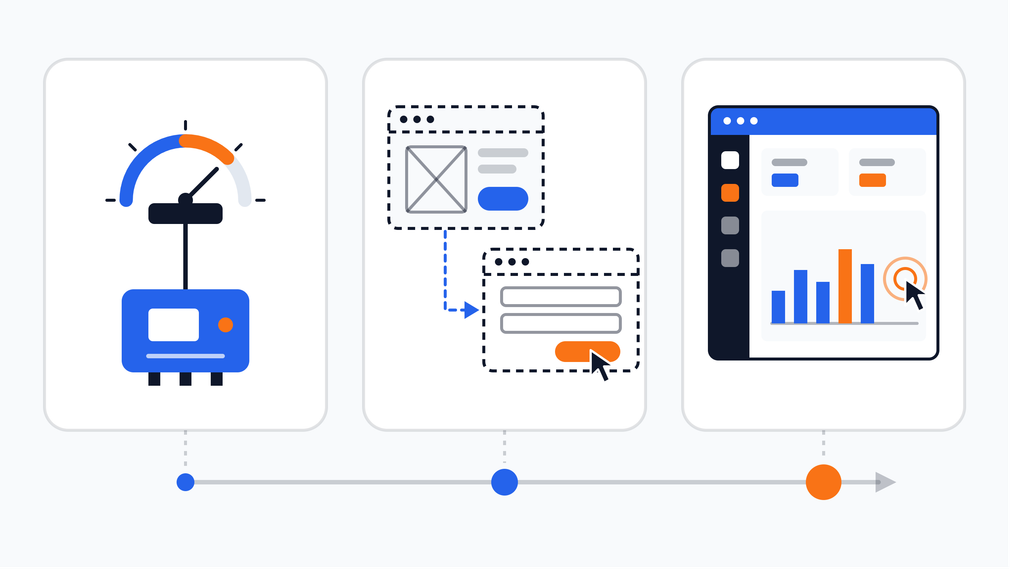
A proof of concept, prototype, and minimum viable product are related, but they serve different purposes. Choosing the right one depends on the uncertainty you need to resolve.
| Comparison | Proof of concept (PoC) | Prototype | Minimum viable product (MVP) |
|---|---|---|---|
| Primary purpose | Test technical feasibility | Explore a design or user experience | Test a product with real users |
| Main question | Can this work technically? | Does this experience or workflow make sense? | Will users find this useful enough to adopt? |
| Typical output | Experiment, measurements, or technical demonstration | Mockup, clickable screens, or simulated workflow | Limited but usable product |
| Intended audience | Technical team and decision-makers | Designers, stakeholders, and potential users | Early customers or target users |
| Production readiness | Usually not production-ready | Usually not production-ready | May be deployed, with appropriate safeguards and scope |
| What it does not establish | Market demand or full-product readiness | Underlying technical feasibility, unless specifically tested | Long-term scalability or the success of every planned feature |
Proof of concept: Can it work?
Suppose you want an AI tool that reviews supplier contracts.
A PoC tests whether the AI can identify selected clauses accurately enough on representative documents.
The output is evidence about technical feasibility, not a finished contract management product.
Prototype: How should it work?
A prototype explores what users will see and how they will interact with the system.
It might demonstrate uploading a contract, reviewing highlighted clauses, and approving or rejecting a recommendation. Some screens may use simulated data rather than a working AI backend.
The prototype helps stakeholders evaluate the workflow before the full interface is developed.
MVP: Will people use it?
An MVP is a limited but usable version of the product that allows you to test important product assumptions with real users.
For the contract review example, it might support document uploads, AI-assisted clause identification, a review screen, and basic user access controls.
The MVP can help you understand adoption, usability, and whether the solution addresses a meaningful business problem.
A simple way to choose:
- Unsure whether a critical technology will work? Start with a PoC.
- Unsure whether the proposed interface or workflow makes sense? Consider a prototype.
- Ready to test the product with actual users? Plan an MVP.
These stages are not mandatory steps in every project. Some projects need only one of them; others benefit from combining them.
When Do You Need a Software Proof of Concept?
A PoC is most useful when an unresolved technical question could significantly affect the project’s feasibility, budget, timeline, or outcome.
Consider one when:
You are building an AI-powered solution. The system depends on model accuracy, document understanding, voice recognition, information retrieval, or reliable responses from an AI model.
You need a complex integration. Your application must exchange data with an ERP, CRM, payment provider, legacy platform, or third-party API with uncertain limitations.
Your data may be difficult to process. Information is incomplete, inconsistent, spread across multiple systems, or stored in formats that require additional processing.
You have demanding performance requirements. The software must handle high transaction volumes, large files, real-time requests, or substantial background processing.
You are introducing unfamiliar technology. The project depends on a new framework, an unusual architecture, or a capability your team has not previously implemented.
A technical failure would be expensive. If an unresolved assumption could force major architectural changes or derail a substantial investment, testing it early may be worthwhile.
When you probably do not need a PoC
Not every software project requires a separate proof of concept.
If you are building a standard business website, a familiar admin dashboard, or an application using established technologies and well-understood requirements, your development team may be able to move directly into implementation.
You may also have enough evidence from existing production systems, previous implementations, or reliable vendor documentation to resolve the uncertainty without a new experiment.
The important question is not whether a PoC sounds professional. It is whether testing a specific unknown will help you make a better decision than proceeding directly.
If you are unsure which stage your project needs, Enlight Lab’s Fractional CTO services can help you evaluate technical options, project risks, and the next appropriate step.
How to Conduct a Proof of Concept in Software Development
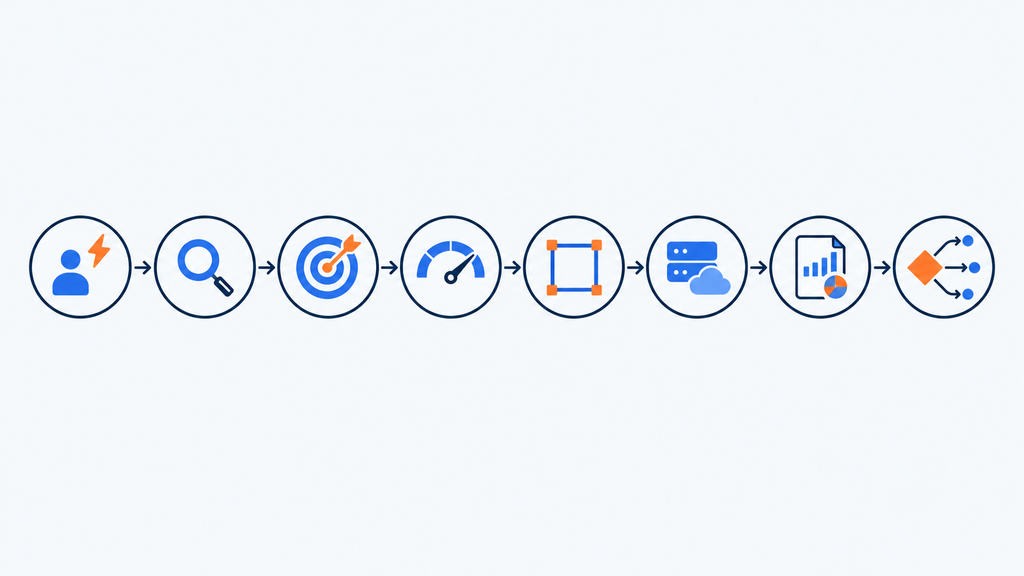
A successful PoC starts with a question, not a feature list. The following process keeps the experiment focused on evidence and decisions rather than unnecessary development.
Step 1: Define the business problem
Begin by explaining the business problem in plain language.
What is happening today?
Why does it matter?
What would improve if the proposed solution worked?
For example:
“Our operations team manually reviews hundreds of supplier invoices each week. We want to reduce repetitive data entry while allowing staff to verify important fields before the information reaches our accounting system.”
This statement describes the problem and intended outcome without prematurely deciding how the software must work.
It also gives the team a way to judge whether the proposed experiment is relevant to the business.
Step 2: Identify the riskiest technical assumption
Next, identify the assumption that could most seriously affect the project.
For the invoice example, possible assumptions include:
- The system can extract required fields from different invoice formats.
- The extracted information is accurate enough for the intended workflow.
- The accounting system supports the required integration.
- The cost of processing each invoice is acceptable.
Do not try to test everything at once.
Choose the uncertainty that is both important and insufficiently understood. If several uncertainties exist, rank them by their potential impact and the effort required to investigate them.
Step 3: Write a testable hypothesis
Turn the assumption into a statement that can be tested.
For example:
“We believe the proposed document-processing approach can extract invoice numbers, dates, supplier names, and totals from representative invoices with at least 95% field-level accuracy.”
The 95% figure here is an illustrative target, not a universal standard. Your team should set its own threshold based on business risk, the quality of the source data, and the consequences of incorrect results.
A useful hypothesis identifies what you expect, how you will measure it, and under which conditions the test will run.
Step 4: Define success and failure criteria before testing
Agree on what the results must demonstrate before running the experiment.
Depending on the project, success criteria could include:
- Minimum accuracy for a defined task.
- Maximum response time under specified conditions.
- Successful completion of a required integration workflow.
- Maximum acceptable cost per transaction.
- Correct handling of specified error conditions.
- No unresolved critical security or privacy issues within the tested scope.
Not every project needs all these measurements. Select the few that directly address the original technical question.
Also define what happens if the result falls short. The team might investigate an alternative, improve the input data, narrow the scope, or conclude that the current approach is unsuitable.
Step 5: Set strict scope boundaries
A PoC should be smaller than the product you eventually intend to build.
For the invoice example, the experiment might cover a representative set of invoices and four required fields. It would not need a complete dashboard, customer onboarding, billing, user administration, or every accounting integration.
Write down what is included and what is explicitly excluded.
Set a time limit, budget limit, and named owner. This prevents the experiment from gradually turning into a full development project without a clear decision about whether that investment is justified.
Step 6: Use realistic data and conditions
A demonstration can look convincing when it uses a handful of clean examples. Real-world performance may be different.
Test data should reflect the conditions the eventual solution will encounter, including relevant variations in format, quality, volume, and complexity.
For AI systems, this may mean testing documents that differ from the examples used during development. For integrations, it may mean testing authentication, permissions, timeouts, incomplete responses, and error handling.
Handle sensitive information appropriately. Use synthetic or anonymized data when suitable, restrict access, and agree on how test data will be stored and removed.
A PoC should investigate real risks without creating unnecessary data or security risks of its own.
Step 7: Measure the results and document limitations
Run the experiment and record what happened against the agreed criteria.
Avoid reporting only the best result. Explain the conditions under which the system succeeded, where it struggled, and what may have influenced the outcome.
For an AI document-processing PoC, that might include field-level accuracy, performance on different document types, processing time, and the amount of human correction required.
For an integration PoC, the report might document successful data exchanges, unsupported fields, permission issues, and failure scenarios.
Be clear about what you have not tested. If the experiment used a small dataset, it does not establish performance across every possible document. If it tested an API connection, it does not prove that the entire application is secure or ready for production.
Step 8: Make an explicit go, revise, or stop decision
The final step is to use the evidence.
There are three common outcomes:
Go: The experiment meets the agreed criteria, and the team has enough evidence to plan the next stage.
Revise: The approach shows promise, but a limitation needs further investigation. You might change the model, improve the data, test an alternative API, or narrow the use case.
Stop: The current approach does not meet a critical requirement, and further investment is not justified without a substantial change in direction.
Stopping a PoC that reveals a fundamental problem is not a failed investment. It can prevent a much larger commitment to an unsuitable solution.
Document the decision, the remaining uncertainties, and the evidence required before the next investment.
Three Software Proof of Concept Examples
The following examples are illustrative scenarios, not claims about specific Enlight Lab client projects. Each shows how a PoC can answer a focused technical question.
Example 1: Testing an AI document-processing system
Business goal: Reduce manual work involved in extracting information from documents.
Technical uncertainty: Can the proposed AI approach extract the required fields accurately across different document types?
PoC scope: Test a representative set of documents against a predefined list of fields. Compare the extracted results with verified reference data.
Measurements: Field-level accuracy, processing time, error patterns, and the amount of human correction required.
Possible outcome: The system performs well on digital documents but struggles with poor-quality scans. The team may decide to improve document preprocessing, introduce human review for uncertain results, or narrow the initial use case.
The PoC helps determine whether the proposed workflow is feasible and what additional controls may be necessary.
For projects like this, reliable source information matters as much as the AI model. A useful next read is Enlight Lab’s existing content on preparing data for AI, provided the relevant article URL is confirmed before publishing.
Example 2: Testing an integration with an existing business system
Business goal: Synchronize customer or transaction data between a new application and an existing ERP or CRM.
Technical uncertainty: Can the systems exchange the required information reliably within the available permissions and API limitations?
PoC scope: Connect a small test application to a sandbox environment. Test authentication, read and write operations, required fields, error handling, and relevant rate limits.
Measurements: Successful transactions, data consistency, response times, and recovery from expected errors.
Possible outcome: Basic data exchange works, but the existing platform does not expose one required field through its standard API. The team can investigate an alternative integration method before designing the full application around an unsupported assumption.
This is especially useful when the new product depends heavily on an existing system that the business does not control.
Example 3: Testing high-volume processing in the cloud
Business goal: Build a platform that processes large volumes of files or transactions without unacceptable delays or operating costs.
Technical uncertainty: Can the proposed processing architecture handle the expected workload within the business’s performance and cost constraints?
PoC scope: Run a representative workload through a limited environment. Test the processing queue, concurrent jobs, failure recovery, and resource consumption.
Measurements: Processing time, throughput, resource usage, error rates, and estimated cost under the tested conditions.
Possible outcome: The system handles normal workloads but slows down when multiple large jobs run simultaneously. The team may need to adjust concurrency, introduce better queue management, or investigate a different architecture.
The experiment provides useful early evidence, but it does not replace proper load testing, security reviews, or production-readiness checks.
How Much Does a Software Proof of Concept Cost?
There is no universal price for software PoC development. The cost depends on the question being tested and the work required to answer it reliably.
A small experiment using an existing API and clean sample data may require relatively little development. A PoC involving AI model evaluation, complex integrations, specialized infrastructure, or sensitive data may require substantially more effort.
The main cost factors include:
- Scope: The number of technical questions and workflows being tested.
- Data: Whether usable test data exists or needs preparation and cleanup.
- Integrations: The number and complexity of external systems involved.
- Technology: Whether the experiment uses established tools or requires specialized expertise.
- Infrastructure: The compute, cloud services, API usage, or model costs required for testing.
- Security and compliance: The controls needed to handle data and evaluate relevant risks.
- Iterations: The number of experiments needed to reach a meaningful conclusion.
A sensible way to estimate the budget is to define the hypothesis, success criteria, test environment, and expected deliverables first. A development partner can then estimate the work required to test those specific requirements.
For broader budgeting context, see Enlight Lab’s software development cost guide, after confirming the page URL.
How long does a PoC take?
The timeline depends on the same factors. A narrowly scoped experiment with accessible data may be completed relatively quickly. A project involving difficult data, multiple systems, or several rounds of testing may take longer.
Rather than choosing an arbitrary deadline, work backward from the decision the PoC needs to support.
Agree on a time limit that is sufficient to run the experiment, evaluate the results, and document the findings. If the question cannot be answered within that limit, the team should explain what additional work is needed and whether it is worth continuing.
The objective is not to complete the most work in the shortest time. It is to obtain enough reliable evidence to make the next decision.
Common Mistakes to Avoid During PoC Development
A proof of concept can become a waste of time if the team treats it as a smaller version of the finished product rather than a focused experiment.
Watch out for these mistakes.
Building too much
Adding dashboards, user accounts, reporting, and unrelated features increases the scope without necessarily helping answer the original question.
Keep the experiment focused on the capability that matters most.
Starting without a clear hypothesis
“We want to see whether AI works” is too vague to guide a meaningful experiment.
Specify the task, the conditions, the expected result, and how you will measure it.
Testing only ideal scenarios
Clean data and simple examples can hide problems that emerge in real workflows.
Use representative test conditions and record the limitations of your dataset.
Changing the success criteria after seeing the results
If the team decides what counts as success only after testing, it becomes easier to justify a result that does not meet the business requirement.
Agree on the criteria before running the experiment.
Ignoring security and privacy
A PoC may still involve sensitive business information, personal data, external APIs, or third-party AI services.
Use appropriate access controls, data-handling practices, and security checks. A limited experiment should not bypass essential safeguards.
Assuming a successful demonstration is production-ready
A PoC may prove that a capability works in a controlled setting. It does not automatically establish that the complete system can handle real users, failures, changing workloads, security requirements, or ongoing maintenance.
Production readiness needs separate evaluation.
Failing to decide what happens next
A report that says the experiment worked is incomplete if nobody knows what the result means for the project.
End with a clear recommendation, remaining risks, and the evidence needed before additional investment.
What Happens After a Successful Proof of Concept?
A successful PoC is a decision point, not the end of the development process.
The next step depends on what the experiment established and what the business still needs to learn.
Move toward an MVP when the technical approach appears feasible and you need to test the product with real users.
Create a prototype when the interface, user journey, or workflow still needs validation.
Plan full development when the key technical uncertainties are sufficiently understood and the team is ready to define the architecture, requirements, budget, and delivery plan.
Run another focused experiment when an important uncertainty remains unresolved.
Change direction or stop when the results show that the current approach cannot meet a critical requirement within acceptable constraints.
Before moving forward, review the PoC’s limitations and identify what needs to change for production. That may include stronger security, better error handling, monitoring, scalability, maintainability, and a more robust architecture.
The experiment’s code may be useful as a reference, but it may also need substantial improvement or replacement. Code written to answer a narrow question is not necessarily suitable for long-term operation.
The key is to carry the learning forward without assuming that a successful experiment eliminates every project risk.
A Practical Software PoC Planning Template
Before starting a PoC, document the following information. This gives business stakeholders and developers a shared understanding of what the experiment is supposed to achieve.
| Planning item | What to document |
|---|---|
| Business problem | What problem are we trying to solve? |
| Technical question | What important uncertainty must we resolve? |
| Hypothesis | What do we believe the experiment will demonstrate? |
| Test data and environment | What representative data and conditions will we use? |
| Success criteria | What measurable results would justify moving forward? |
| Scope limits | What is included, and what is explicitly excluded? |
| Time and budget | How much effort are we willing to invest in this experiment? |
| Risks and safeguards | What data, security, privacy, or operational concerns must be addressed? |
| Final decision | What will we do if the result is positive, mixed, or negative? |
You do not need a lengthy technical specification to get started. A concise document that answers these questions is often a better starting point than a large feature list.
Should You Build a Proof of Concept Before Investing in Software Development?
A software proof of concept is valuable when an unresolved technical assumption could materially affect the success of your project.
It helps you test feasibility, uncover limitations, compare approaches, and decide whether further investment is justified. It can be particularly useful for AI-powered products, complex integrations, unfamiliar technologies, and software with demanding performance requirements.
However, a PoC is not automatically necessary for every project. If the requirements and technical approach are already well understood, moving directly into development may be more practical.
The right decision comes from understanding what remains uncertain, how much it matters, and what evidence you need before committing more resources.
Planning a software PoC? Start with the riskiest assumption.
Before investing in a complete custom software or AI solution, identify the technical question that could have the greatest impact on your project.
Enlight Lab helps businesses evaluate technical approaches, develop custom software and AI solutions, and plan the next steps from early validation through implementation.
If you have an idea but are unsure about its technical feasibility, scope, or best development approach, talk to Enlight Lab about the questions you need to resolve before building.
The goal is not to build a PoC for its own sake. It is to make your next technology investment with better evidence and a clearer plan.