Key takeaways before you read further:
-
- Most software projects fail due to poor vendor selection, misaligned expectations, or inadequate architecture not budget
- The difference between a custom software development company, a staff augmentation firm, and an IT consulting company matters significantly at the enterprise level
- Fixed-price contracts favor vendors, not buyers, on complex projects
- Technical due diligence is not optional skipping it is one of the most expensive decisions an enterprise buyer can make
- The cheapest software development company almost always delivers the highest total cost of ownership
Security, compliance, and architecture reviews belong in the evaluation phase, not the onboarding phase

How Do You Hire a Software Development Company?
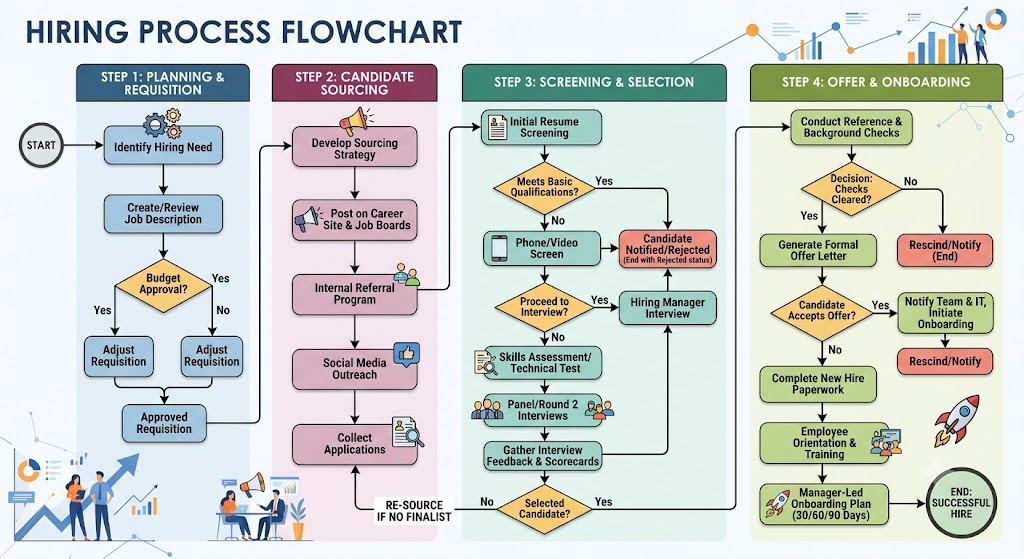
To hire a software development company, define your business objectives and technical requirements first. Then shortlist vendors by technical capability, domain experience, and engagement model fit. Evaluate architecture approach, security posture, and portfolio depth. Run a paid pilot project before signing a long-term contract. Formalize the engagement with a Master Service Agreement (MSA) and a detailed Statement of Work (SOW).
The full process spans ten steps and typically takes four to eight weeks for enterprise buyers. Each step is covered in detail in the hiring process section below.
Why Hiring the Right Software Development Company Is a Critical Business Decision
One of the most persistent misconceptions in enterprise technology procurement is that software development vendors are largely interchangeable. In reality, the wrong vendor can cost more than the contract value and the damage compounds over time.
According to the Standish Group’s CHAOS Report, approximately 66% of technology projects fail to meet their original time, budget, or scope targets. A significant portion of those failures trace back to vendor selection, not technical complexity. Poor architecture decisions made in the first few sprints create technical debt that takes years to unwind. A vendor without genuine DevOps maturity will deliver a product you struggle to deploy and maintain. A partner without security experience will create compliance exposure you discover during an audit, not during development.
The specific risks of a poor hiring decision include:
Project failure and cost overruns: Vendors who underquote to win business, then inflate scope changes, are common. Enterprise buyers who skip due diligence consistently see budget overruns of 40 to 200%.
Technical debt: Code written without architectural governance or quality standards creates compounding maintenance costs. McKinsey estimates that technical debt accounts for 20 to 40% of the total value of technology estates in large organizations.
Poor architecture: An application built on the wrong architectural pattern monolithic when modular is needed, or tightly coupled when distributed is required becomes a constraint on your business as you scale.
Vendor lock-in: Proprietary frameworks, undocumented codebases, and contract terms that restrict access to source code are not hypothetical risks. They are standard outcomes when vendor evaluation skips architecture and IP ownership review.
Security vulnerabilities: A vendor without security-by-design practices will introduce vulnerabilities into your production environment. OWASP’s Application Security Verification Standard provides the baseline but most mid-tier vendors have never reviewed it.
Maintenance failures: Software that works at launch and degrades over 18 months is a sign of poor code quality, inadequate testing coverage, and absent documentation. You inherit that problem as the buyer.
The right software development partner reduces all of these risks before the first line of code is written.
What Is a Software Development Company?
Understanding the distinctions between delivery models prevents misaligned expectations and costly mid-project pivots.
| Model | What They Do | Best For | Key Risk |
| Custom software development company | Builds bespoke software from requirements to deployment | Projects with unique business logic or no off-the-shelf fit | Higher upfront cost; quality varies widely |
| Software engineering company | Provides end-to-end engineering architecture, development, QA, DevOps | Complex enterprise products requiring full technical ownership | Over-reliance on vendor for institutional knowledge |
| Staff augmentation firm | Supplies individual engineers to embed in your team | Filling specific skill gaps quickly | You manage the engineers; quality depends on your oversight |
| IT consulting company | Advises on technology strategy, vendor selection, architecture | Transformation initiatives and large program governance | Recommendations without execution accountability |
| Dedicated development team | A managed team assigned exclusively to your project | Long-term product development with consistent velocity | Slower to ramp; higher monthly cost than staff augmentation |
| Product engineering firm | Designs and builds digital products with product management involvement | Startups and enterprises launching new digital products | Scope creep if product vision is underdefined |
| Freelancers | Individual contributors hired per task or project | Small, well-defined tasks with low business criticality | No accountability, no team, no architecture governance |
The critical distinction for enterprise buyers: a staff augmentation firm provides people. A software development company provides outcomes. Confusing the two leads to hiring a team of individual contractors and then wondering why no one is responsible for architecture, integration quality, or on-time delivery.
Types of Software Development Companies
Not every software development vendor serves enterprise buyers equally. The market segments into distinct categories, each with a different value proposition, cost profile, and risk pattern.

Enterprise IT Consulting Companies
Firms like Accenture, Deloitte Digital, and IBM Services operate at the intersection of business strategy and technology implementation. They excel at large-scale digital transformation programs, governance frameworks, and vendor management but their delivery models are often expensive, and output quality depends heavily on the specific team assigned, not the brand.
Custom Software Development Companies
These firms build software to specification. The best ones bring strong architecture practices, full-stack engineering teams, QA automation, and DevOps capability. The quality range across this category is wider than any other segment. A rigorous evaluation process is non-negotiable.
AI Development Companies
Specialists in machine learning, LLM integration, AI agents, computer vision, and data science. Relevant when your project involves predictive modeling, generative AI, or intelligent automation. Evaluate for ML engineering depth, not just API integration experience.
Mobile App Development Companies
Focused on iOS, Android, and cross-platform mobile applications. Look for React Native or Flutter expertise if cross-platform is your requirement, and native Swift or Kotlin experience if performance and device integration are priorities.
Cloud Consulting Companies
AWS, Google Cloud, and Microsoft Azure partners who specialize in cloud architecture, migration, infrastructure-as-code, and managed services. Relevant for modernization programs and greenfield cloud-native builds.
Product Engineering Firms
Combine product management, UX design, and engineering in a single engagement model. Best suited for organizations that need the full product development lifecycle managed by one partner. Enlight Lab operates as a product engineering firm for its startup and enterprise clients.
DevOps and Platform Engineering Companies
Specialize in CI/CD pipeline design, Kubernetes orchestration, infrastructure automation, and site reliability engineering (SRE). Critical for enterprises with complex deployment environments or high-availability requirements.
Data Engineering Companies
Build data pipelines, warehouses, and lakehouse architectures. Relevant when AI initiatives or analytics programs depend on clean, reliable, and scalable data infrastructure.
Healthcare Software Development Companies
Combine clinical workflow knowledge with HIPAA compliance, HL7/FHIR integration, and EHR system expertise. Choosing a generalist vendor for healthcare software is a common and expensive mistake.
FinTech Development Companies
Specialize in payment processing, core banking integration, regulatory compliance (PCI DSS, SOC 2, ISO 27001), and high-volume transaction systems. Security and auditability are table stakes, not differentiators.
SaaS Development Specialists
Focus on multi-tenant architecture, subscription billing, API-first design, and the scalability patterns that define successful SaaS products.
Step-by-Step: How to Hire a Software Development Company
Step 1: Define Business Goals Before Writing a Single Requirement
The most common reason software projects fail to deliver business value is that the buying organization started with technology requirements instead of business objectives. Before approaching any vendor, answer three questions: What measurable business outcome does this project need to produce? What does success look like in 90 days, 12 months, and three years? What is the cost of not building this?
These answers shape every subsequent decision from engagement model to vendor shortlist to contract structure.
Step 2: Prepare a Technical Requirements Document
Translate business goals into a structured technical brief. Include: system scope and integrations, expected user volumes, performance requirements, security and compliance constraints, platform preferences, and any architectural guidelines your organization mandates. The more specific this document is, the more useful vendor proposals will be and the more clearly you can compare them.
Step 3: Choose an Engagement Model
The engagement model determines how work is priced, how risk is allocated, and how flexible the project can be as requirements evolve. Most enterprise buyers default to fixed-price contracts for perceived cost certainty. This is frequently the wrong choice.
| Engagement Model | Pricing Structure | Best For | Buyer Risk |
| Fixed price | Agreed scope for a fixed fee | Well-defined, stable-scope projects | Scope changes are expensive; vendors over-specify to protect margin |
| Time & materials (T&M) | Hourly or daily rates for actual work done | Exploratory or evolving projects | Budget predictability requires active management |
| Dedicated team | Monthly retainer for a full assigned team | Long-term product development | Slower ramp-up; higher monthly cost |
| Staff augmentation | Individual engineers billed by time | Filling skill gaps within your existing team | You own management and architecture accountability |
| Outcome-based | Milestone or KPI-linked payments | Mature vendor relationships with clear deliverables |
Requires precise measurement frameworks |
Fixed-price works well when requirements are stable and fully specified. Time-and-materials works better for most enterprise software projects, where requirements evolve as the build progresses. Dedicated team models suit organizations that need consistent velocity over 12 months or more.
Step 4: Evaluate Technical Capability
Do not rely on a vendor’s marketing materials to assess technical capability. Request evidence. Ask for code samples, architecture diagrams from past projects, GitHub profiles for senior engineers, and details of the CI/CD pipeline used in production deployments. If the vendor cannot provide these, they are either underqualified or concealing gaps.
Evaluate against five dimensions: architecture maturity, testing practices, DevOps capability, security posture, and documentation standards.
Step 5: Review Portfolio and Case Studies
A vendor’s portfolio reveals their true domain depth. Look for projects with comparable technical complexity, similar integration requirements, and verifiable outcomes. Request reference contacts and actually call them. Ask references: What went wrong? How did the vendor respond? Would you hire them again for a larger project?
Unverified testimonials on a vendor’s website carry zero evaluative weight.
Step 6: Interview the Engineers Who Will Work on Your Project
Many software development companies have experienced principals who present well and junior delivery teams who produce the actual code. Interview the specific engineers assigned to your engagement. Evaluate their communication quality, technical depth, and ability to reason about architecture trade-offs. If the vendor refuses to allow direct engineer access before contract signing, treat that as a red flag.
Step 7: Conduct a Security Assessment
Request the vendor’s most recent security policies, data handling procedures, and any relevant certifications: ISO 27001, SOC 2 Type II, or equivalent. Ask specifically how they handle secrets management, code repository access controls, and dependency vulnerability scanning. For regulated industries, confirm HIPAA, PCI DSS, or GDPR compliance practices.
Vendors who describe security in vague, generic terms typically do not have mature security practices.
Step 8: Architecture Discussion
Before any code is written, conduct a structured architecture review session. Provide your technical requirements and ask the vendor to propose an architecture. Evaluate their reasoning process: Do they ask the right questions? Do they explain trade-offs? Do they recommend what serves your long-term needs or what is easiest to build?
Poor architecture is the root cause of most technical debt, scalability failures, and vendor lock-in situations. A vendor who cannot defend their architectural decisions in a pre-sale conversation will not produce defensible architecture in production.
Step 9: Run a Paid Pilot Project
A paid pilot of two to four weeks is the most reliable way to evaluate a software development company before a long-term commitment. Define a small, representative piece of work. Evaluate code quality, communication cadence, responsiveness to feedback, documentation thoroughness, and delivery against timeline. The cost of a pilot is trivial relative to the cost of a failed six-month engagement.
Step 10: Contract MSA, SOW, and SLA
A well-structured contract protects both parties. The Master Service Agreement (MSA) governs the relationship: intellectual property ownership, confidentiality, liability limits, dispute resolution, and termination terms. The Statement of Work (SOW) defines the specific project: scope, deliverables, milestones, acceptance criteria, and payment schedule. The Service Level Agreement (SLA) specifies performance expectations, response times, and escalation procedures.
Three terms require particular attention: IP ownership (you must own the code and all derivative works), source code escrow (for critical systems), and termination for convenience clauses that allow you to exit without penalty if performance falls short.
Enterprise Evaluation Checklist
How to Evaluate a Software Development
Use this checklist to score each shortlisted vendor before final selection. Rate each item 1–5.
Technical Capability
-
- Architecture review completed and documented
-
- Engineering team interviews conducted
-
- Code quality assessed via sample or audit
-
- Testing strategy reviewed (unit, integration, end-to-end coverage)
-
- DevOps and CI/CD pipeline evaluated
-
- Scalability and performance approach assessed
-
- Documentation standards reviewed
Security and Compliance
-
- Security policies reviewed
-
- ISO 27001 or SOC 2 certification confirmed (or equivalent)
-
- OWASP ASVS compliance approach assessed
-
- Data handling and secrets management evaluated
-
- Regulatory compliance capability confirmed (HIPAA, GDPR, PCI DSS as applicable)
-
- Vulnerability management process reviewed
-
- Audit logging practices evaluated
Delivery and Project Management
-
- Project management methodology assessed (Agile, Scrum, Kanban)
-
- Sprint cadence and reporting structure reviewed
-
- Change management process evaluated
-
- Risk management approach reviewed
-
- Escalation procedures defined
Team and Communication
-
- Seniority mix of assigned team confirmed
-
- Communication tools and cadence aligned
-
- Time zone overlap assessed
-
- English language proficiency evaluated (for offshore vendors)
-
- Dedicated project manager or technical lead confirmed
Commercial and Contractual
-
- Engagement model finalized
-
- Pricing structure reviewed against market benchmarks
-
- IP ownership terms confirmed
-
- Termination and exit procedures reviewed
-
- SLA terms assessed
AI and Cloud Readiness (if applicable)
-
- AI development experience verified
-
- Cloud architecture capability assessed
-
- MLOps or LLMOps maturity evaluated
-
- Cloud cost governance practices reviewed
Technical Due Diligence: What to Evaluate and Why It Matters
Technical due diligence is the process of systematically evaluating a vendor’s technical practices before or during an engagement. It applies both to new vendor selection and to inherited projects from previous vendors.
Most enterprise buyers skip this step. The consequences appear 12 to 18 months later as rising maintenance costs, scaling failures, or security incidents.
Code Quality
Review a sample of production code for readability, consistency with agreed standards, and absence of known anti-patterns. Look for meaningful variable names, appropriate abstraction levels, and evidence of peer review. Code that cannot be read by a new engineer within 30 minutes was written for the original developer, not for the organization.
Architecture Assessment
Evaluate the overall system design: service decomposition, data flow, integration patterns, and dependency management. The right architecture is contextual a monolith may be the correct choice for an early-stage product; a distributed microservices architecture may be correct for a high-scale platform. What matters is that the architecture reflects a deliberate decision with documented reasoning, not convenience.
Testing Coverage
Request test coverage reports. Production-ready software should have meaningful unit and integration test coverage. The absence of automated tests is a reliable predictor of future maintenance cost and deployment risk.
DevOps Maturity
Evaluate the CI/CD pipeline, environment management, infrastructure-as-code practices, and deployment frequency. According to Google’s State of DevOps research, elite-performing technology teams deploy to production multiple times per day with change failure rates below 5%. A vendor who deploys monthly via manual processes represents delivery and reliability risk.
Documentation
Assess whether system architecture, API specifications, deployment procedures, and onboarding guides exist and are current. Undocumented systems create knowledge concentration risk one engineer departure can render a system unmaintainable.
Scalability and Technical Debt
Identify architectural decisions that will constrain growth: synchronous dependencies at scale, unsharded databases, hard-coded configuration, or stateful services that cannot be horizontally scaled. Document the technical debt backlog and factor remediation costs into total cost of ownership projections.
25 Questions Every CTO Should Ask Before Hiring a Software Development Company
Architecture and Engineering
- How do you approach system architecture at the start of a new project?
- Can you walk us through the architecture of a recent system you built at comparable scale?
- How do you handle architectural decisions that need to change mid-project?
- What is your approach to service decomposition how do you decide between monolithic and distributed architectures?
- How do you manage technical debt during active development?
- What is your strategy for database design and data migration?
- How do you design for observability logging, monitoring, alerting?
Security and Compliance
- What security practices are embedded in your development process?
- How do you handle secrets management and credential rotation?
- What is your process for dependency vulnerability scanning?
- How would you approach OWASP Top 10 mitigation for a web application?
- What certifications does your organization hold, and can you provide documentation?
- How do you handle data residency and cross-border data transfer requirements?
Testing and Quality
- What is your testing strategy what types of tests do you write, and at what coverage thresholds?
- How do you manage QA is it embedded in the development team or a separate function?
- How do you approach performance testing and load testing
- What is your defect management process?
.Delivery and Process
- How do you structure sprints and what does your delivery cadence look like?
- How do you handle scope changes mid-project?
- Who will be our primary technical contact, and what is their seniority?
- What is your escalation process if a critical issue arises in production?
How do you manage knowledge transfer at project end?Commercial and Risk
- Who owns the intellectual property for all code written under this engagement?
- What happens to our codebase if we terminate the contract early?
- Can you provide three client references from projects of comparable scale, and will you allow us to contact them directly?
Red Flags: When to Walk Away from a Software Development Vendor
Not every red flag is disqualifying in isolation. But multiple red flags from the same vendor are a reliable signal that the engagement will underperform.
Pricing red flags:
-
- Quotes significantly below market rates (typically 40%+ below comparable vendors) without a credible explanation
-
- Fixed-price proposals for poorly defined requirements this almost always leads to scope disputes
-
- Unclear payment terms or payment milestones tied to time rather than deliverables
Team and capability red flags:
-
- Inability or refusal to identify the specific engineers assigned to your project
-
- Senior presenters in sales meetings; junior-only delivery teams
-
- No verifiable certifications or credentials for specialized claims (security, AI, cloud)
-
- High turnover rates disclosed during reference checks
Process and quality red flags:
-
- No documented testing strategy or automated testing capability
-
- No CI/CD pipeline or evidence of modern DevOps practices
-
- No architecture documentation for past projects
-
- QA described as a final phase rather than an embedded practice
Architecture and ownership red flags:
-
- Proprietary frameworks that create lock-in without clear business justification
-
- Resistance to sharing source code access or documentation
-
- No clear answer on IP ownership in the contract
-
- Inability to articulate architecture trade-offs for your specific context
Communication red flags:
-
- Slow or inconsistent responses during the sales process this predicts delivery communication quality
-
- Vague or evasive answers to direct technical questions
-
- No dedicated project manager or technical lead assigned
-
- Overpromising timelines without credible delivery plans
Security red flags:
-
- No security certifications and no documented security practices
-
- Vague or dismissive responses to compliance questions
-
- No evidence of security testing in the software development process
Software Development Pricing: What You Should Expect to Pay
One of the most common mistakes enterprise buyers make is treating vendor selection as primarily a cost exercise. Price is one input into a total cost of ownership calculation not the primary decision criterion.
Hourly Rates by Region (2026 Estimates)
| Region | Mid-Level Developer | Senior Developer | Tech Lead / Architect |
| North America | $100–$175/hr | $150–$250/hr | $200–$350/hr |
| Western Europe | $80–$140/hr | $120–$200/hr | $160–$280/hr |
| Eastern Europe | $40–$80/hr | $65–$110/hr | $90–$150/hr |
| India / South Asia | $25–$55/hr | $45–$85/hr | $65–$120/hr |
| Latin America | $40–$75/hr | $60–$100/hr | $80–$140/hr |
| Southeast Asia | $30–$65/hr | $50–$90/hr | $70–$130/hr |
Note: Rates vary significantly by vendor size, specialization depth, and project complexity. These ranges reflect market estimates and should be validated during procurement.
Project-Level Pricing
| Project Type | Typical Range | Key Cost Drivers |
| Proof of concept / MVP | $30,000–$120,000 | Scope clarity, team size, technology choices |
| Department-level application | $100,000–$400,000 | Integrations, compliance requirements, user scale |
| Enterprise platform | $400,000–$2,000,000+ | Architecture complexity, multi-system integration, governance |
| AI-powered application | $75,000–$600,000+ | Data readiness, model selection, RAG architecture |
| Legacy modernization | $200,000–$1,500,000+ | Codebase size, documentation availability, migration risk |
Hidden Costs Most Buyers Underestimate
Infrastructure and hosting: Vendor quotes rarely include ongoing cloud infrastructure costs. AWS, Azure, or Google Cloud costs for a production application can add 10 to 30% to annual operating costs.
Integration complexity: Each new system integration CRM, ERP, legacy API typically adds two to six weeks of development time and ongoing maintenance overhead.
Compliance and security hardening: Retrofitting security controls or compliance requirements after development averages 15 to 25% of original project cost, according to NIST security cost modeling.
Knowledge transfer: Poorly managed vendor transitions can require three to six months of parallel running costs and consultant time.
Post-launch optimization: Production systems require continuous performance monitoring, bug remediation, and feature iteration. Budget 15 to 25% of annual development cost for ongoing maintenance.
Total Cost of Ownership vs. Lowest Quote
A vendor quoting $80,000 for a project that a credible firm quotes at $150,000 is not a better deal. It is a different risk profile. The lower quote is typically achieved through offshore-only junior teams, reduced testing, absent documentation, or aggressive change-order terms. The total cost of the lower-priced engagement including rework, change orders, delays, and maintenance frequently exceeds the higher initial quote within 18 months.
Software Development Company vs. Freelancer
| Dimension | Software Development Company | Freelancer |
| Team depth | Multi-discipline team: engineers, QA, DevOps, PM | Single individual |
| Architecture accountability | Vendor owns design decisions | Buyer owns architecture |
| Continuity | Continued even if individual leaves | Project pauses if freelancer becomes unavailable |
| IP and contracts | Formal MSA, SOW, IP assignment | Variable; requires buyer-drafted agreements |
| Communication | Structured project management | Ad hoc; varies by individual |
| Cost | Higher monthly spend | Lower hourly rate; higher management overhead |
| Risk profile | Lower delivery risk | Higher delivery risk for complex projects |
| Best for | Projects requiring team coordination, architecture, and QA | Well-defined, narrow-scope tasks |
Choose a software development company over a freelancer when:
-
- The project requires coordination across multiple disciplines (frontend, backend, DevOps, QA)
-
- Architecture decisions will affect the system for years
-
- Compliance or security requirements need systematic governance
-
- Business continuity matters one person’s departure cannot halt your project
Software Development Company vs. Staff Augmentation
| Dimension | Software Development Company | Staff Augmentation |
| Outcome accountability | Vendor accountable for deliverables | Buyer accountable; vendor provides people |
| Management overhead | Managed by vendor | Managed by buyer |
| Architecture ownership | Vendor-led, with buyer input | Buyer-owned |
| Team integration | Separate delivery team | Engineers embed in your team |
| Ramp-up speed | 2–4 weeks | 1–2 weeks per engineer |
| Cost model | Project or retainer-based | Time-based per engineer |
| Best for | End-to-end delivery without internal engineering leadership | Scaling a capable internal team with specific skill gaps |
Choose staff augmentation over a software development company when:
-
- You have a strong internal engineering team with clear architectural direction
-
- You need to fill a specific skill gap temporarily (e.g., a machine learning engineer for a defined phase)
-
- Your internal team can absorb the management overhead
-
- You want direct control over day-to-day engineering decisions
Software Development Company vs. In-House Team
| Dimension | Software Development Company | In-House Team |
| Time to start | 2–6 weeks | 3–9 months (hiring, onboarding) |
| Cost structure | Variable; project or retainer | Fixed salaries, benefits, tooling overhead |
| Domain breadth | Vendor provides multi-discipline expertise | Expertise limited to who you hire |
| Knowledge retention | Risk of knowledge with vendor at project end | Institutional knowledge retained internally |
| Culture and alignment | Requires deliberate relationship management | Fully integrated with organizational culture |
| Flexibility | Scale up or down with project needs | Scaling down is expensive (redundancy costs) |
| Best for | Projects with defined timelines, new capabilities, or time-to-market pressure | Core product teams with long-term product roadmaps |
Choose an in-house team over a software development company when:
-
- The software is a core competitive differentiator that requires deep institutional knowledge
-
- You are building a long-term product with a multi-year roadmap
-
- Regulatory requirements demand that engineering personnel are employees, not contractors
-
- The cost and timeline of hiring is acceptable relative to your delivery schedule
Industry-Specific Considerations
Different industries impose technical, regulatory, and operational requirements that must be evaluated during vendor selection.
Healthcare: HIPAA compliance is non-negotiable. Vendors must demonstrate experience with HL7/FHIR standards, EHR integration, audit logging, and minimum necessary data access principles. Ask specifically about their experience with healthcare data encryption at rest and in transit, and their approach to protected health information (PHI) handling. A generalist vendor without verifiable healthcare delivery experience represents unacceptable compliance risk.
Financial Services: PCI DSS, SOC 2 Type II, and applicable regional banking regulations govern software development in financial services. Vendors must demonstrate experience with secure coding practices, penetration testing cadence, and financial data governance. Real-time transaction systems require specific experience with high-availability architecture and failover design.
Manufacturing and Supply Chain: OT/IT convergence, ERP integration (SAP, Oracle), and real-time data requirements dominate this sector. Vendors should have experience with industrial IoT architectures, SCADA integration, and the latency requirements of manufacturing environments.
Retail and E-commerce: Peak traffic handling, payment processing (PCI DSS), personalization infrastructure, and omnichannel integration define the technical requirements. Evaluate vendor experience with CDN architecture, database sharding at scale, and A/B testing infrastructure.
Education: FERPA compliance (US) and equivalent regional data protection for student records. Accessibility compliance (WCAG 2.1 AA) is increasingly mandated. Learning Management System (LMS) integration experience is typically required.
Government and Public Sector: FedRAMP, ITAR, and agency-specific frameworks govern US federal projects. Vendors must often provide evidence of US-based engineering teams and cleared personnel for sensitive systems. Procurement processes are longer and more formal; budget appropriately.
SaaS Products: Multi-tenant architecture, API-first design, subscription billing infrastructure, and scalability from 10 to 10,000 tenants are the defining technical requirements. Evaluate vendor experience with SaaS-specific patterns: tenant isolation, feature flagging, usage-based billing, and SLA monitoring.
12 Common Mistakes Enterprise Buyers Make When Hiring a Software Development Company
1. Selecting on price alone
The vendor with the lowest quote rarely delivers the lowest total cost of ownership. Price signals risk, not value.
2. Skipping technical due diligence
Reviewing a portfolio deck is not due diligence. Reviewing actual code, architecture diagrams, and CI/CD pipelines is.
3. Evaluating the sales team, not the delivery team
The people who present in the sales meeting are often not the people who will build your software. Interview the engineers.
4. Choosing a fixed-price contract for an evolving scope
Fixed-price engagements on complex enterprise projects consistently produce scope disputes, change-order inflation, and delivery failure.
5. Ignoring time zone overlap
An eight-hour time zone gap with no overlap creates a 24-hour feedback loop. Over a six-month project, this compounds into significant delivery delay.
6. Skipping the pilot project
No evaluation process is more reliable than a paid pilot. Organizations that skip the pilot to save time frequently spend three to five times the pilot cost unwinding a poor engagement.
7. Not requiring IP ownership explicitly in the contract
Verbal assurances about code ownership are not enforceable. The MSA must explicitly assign all intellectual property, including derivative works, to the client.
8. Assuming compliance will be handled
Every enterprise buyer assumes the vendor is handling compliance. Vendors assume the buyer is defining compliance requirements. Specify every applicable standard explicitly in the SOW.
9. Not involving internal stakeholders until late in the process
Security, legal, procurement, and engineering leadership each have legitimate evaluation criteria. Involving them after vendor selection produces reversals and delays.
10. Failing to define acceptance criteria
“Done” is not a delivery standard. Define acceptance criteria specific, measurable conditions that a deliverable must meet before payment is released.
11. Underestimating knowledge transfer requirements
At project end, all system documentation, architecture decision records, deployment procedures, and operational runbooks must be formally transferred. This process takes time and should be scoped as a project phase.
12. Treating the contract as the relationship
The contract defines the floor of the relationship, not the ceiling. The quality of communication, escalation handling, and collaborative problem-solving determines whether a project succeeds. Invest in the relationship, not just the paperwork.
Enterprise Buyer’s Checklist: Before You Sign
Use this checklist before finalizing any software development vendor engagement.
Business Alignment
-
- Business objectives for this project are documented and agreed internally
-
- Success metrics are defined measurable, time-bound, and specific
-
- Internal stakeholders (security, legal, engineering, procurement) have been consulted
-
- Build vs. buy analysis has been completed and documented
Vendor Evaluation
-
- At least three vendors have been evaluated against consistent criteria
-
- Portfolio reviewed and reference calls completed for each shortlisted vendor
-
- Engineering team interviews conducted with the specific team assigned to your project
-
- Technical capability assessed across architecture, testing, DevOps, security, and documentation
-
- Pilot project completed and output evaluated
Technical Due Diligence
-
- Architecture approach reviewed and documented
-
- Code quality assessed (sample reviewed by your internal engineer or independent auditor)
-
- Testing strategy and coverage targets confirmed
-
- CI/CD pipeline and deployment process reviewed
-
- Security posture assessed and certifications verified
-
- Scalability approach reviewed against your growth projections
Security and Compliance
-
- Applicable compliance frameworks identified (HIPAA, GDPR, PCI DSS, SOC 2, ISO 27001)
-
- Vendor compliance capability confirmed with documentation
-
- Data handling and retention requirements specified in the SOW
-
- Security testing (SAST, DAST, penetration testing) included in the scope
-
- NDA signed before sharing proprietary technical information
Commercial and Contractual
-
- Engagement model selected and rationale documented
-
- Pricing reviewed against market benchmarks
-
- MSA reviewed by legal IP ownership, liability, confidentiality, termination terms
-
- SOW reviewed scope, deliverables, milestones, acceptance criteria, payment schedule
-
- SLA defined response times, escalation paths, uptime commitments
-
- Source code access and escrow arrangements confirmed
-
- Exit and transition procedures documented
Operational Readiness
-
- Communication tools, cadence, and escalation paths agreed
-
- Access provisioning process defined (environments, repositories, documentation)
-
- Onboarding timeline and ramp period agreed
-
- First sprint goals defined and acceptance criteria documented
Final Recommendation: Who Should Hire Whom
There is no universal answer to which software development model is right for every enterprise. The correct choice depends on four variables: your internal engineering capability, your delivery timeline, the technical complexity of the project, and your appetite for management overhead.
Hire a custom software development company when:
-
- You need end-to-end delivery accountability and your internal team cannot own the architecture
-
- Your project requires a multi-discipline team (engineering, QA, DevOps, design) that you do not have internally
-
- You have a defined project with a timeline and deliverables that can be contracted
-
- Speed to market is a priority and building an internal team would take too long
Choose staff augmentation when:
-
- Your internal engineering team is strong but has a specific skill gap
-
- You want to retain direct control over architecture and day-to-day engineering decisions
-
- The engagement is likely to be temporary scaling down staff augmentation is faster and cheaper than ending a vendor contract
Build an in-house team when:
-
- The software is a core competitive differentiator that requires deep institutional knowledge over a multi-year horizon
-
- Regulatory constraints require employees rather than contractors
-
- Your organization has the time, budget, and capability to hire and retain senior engineering talent
Use an IT consulting company when:
-
- You need strategic guidance on technology selection, architecture, or program governance but have internal or partner delivery capability
-
- You are navigating a large-scale transformation and need independent assessment of options
The best software development partnerships share three characteristics: clear business objectives, transparent communication, and shared accountability for outcomes. Vendors who resist transparency on team composition, architecture decisions, or delivery status consistently underperform those who embrace it.
Technical due diligence, a paid pilot, and a well-structured contract are not bureaucratic hurdles. They are the mechanisms that convert vendor selection from a high-risk procurement exercise into a repeatable, defensible process.
If you are preparing to evaluate software development vendors and want an independent technical assessment of your requirements, architecture approach, or vendor shortlist, Enlight Lab’s engineering team provides pre-engagement advisory support.